


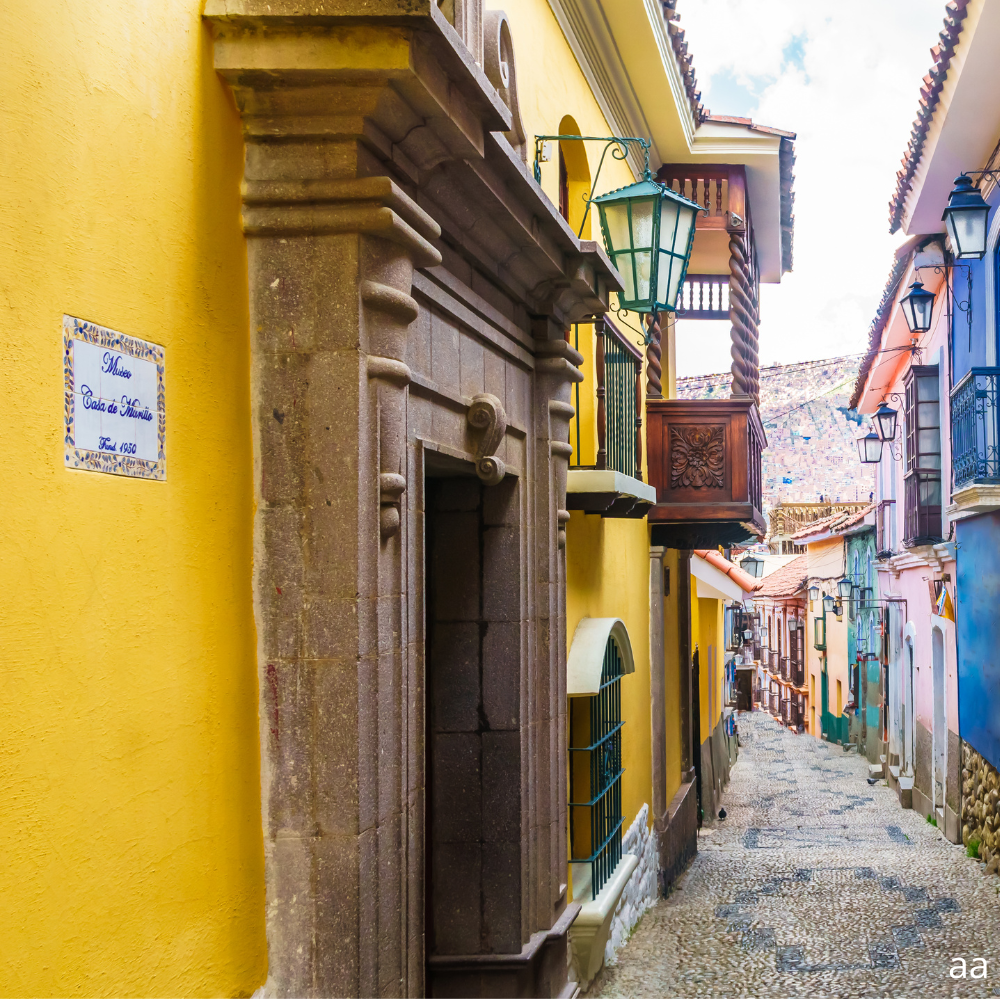

In the heart of La Paz, just a few minutes from Murillo Square, there is a street that seems to have stopped in time. Calle Jaén is the best-preserved colonial street in the entire city—and possibly in Bolivia.
Its adobe houses painted in vibrant colors, its wooden balconies, its colonial cobblestones, and its iron lampposts make it one of the most photogenic spots in the country. It's no coincidence that it's one of the most photographed streets in all of South America.
But Jaén isn't just a pretty street—it's an open-air museum. Along its mere 200 meters, it houses four historical museums: the Museum of the Bolivian Coast, which tells the story of Bolivia's lost access to the sea in the War of the Pacific; the Juan de Vargas Museum of Costumbrista Art; the Gold Museum; and the Pedro Domingo Murillo House Museum, dedicated to the hero of Bolivian independence executed in 1810.
The street was built during the Spanish colonial era in the 18th century and is named after the first governor of La Paz. Today it is a Cultural Heritage site of Bolivia and one of the few places where La Paz's colonial architecture remains intact.
Visiting it at sunset, when the golden light strikes the colorful facades, is one of those experiences travelers remember forever.
Frequently ask questions
Aiplan is a digital platform that connects international tourists with the best tour operators in Bolivia. We work with 15 legally established and certified tour operators, selected for their experience,...
Yes. We only work with tour operators legally registered in Bolivia and certified liability insurance policies.